Dopamine detox: the name is wrong, but half the idea works
You don’t need a weekend without anything you enjoy. You need your one problem habit kept to set times.
8 October 2026 · 4 min read
Sunday. No phone, no music, no podcasts, no news. By evening you feel calm and a little proud of yourself.
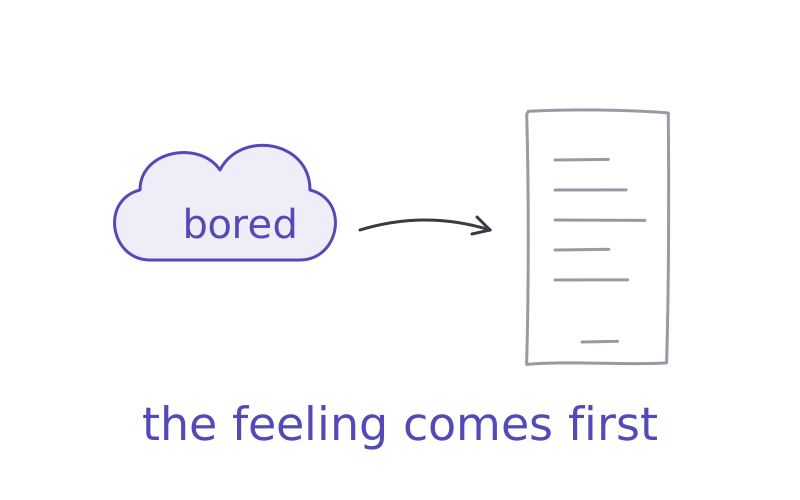
Monday, 10:14am. You’re three articles deep in the news app and can’t say how you got there.
Where the idea came from
Dopamine detox, or dopamine fasting, spread fast in 2019, mostly through Silicon Valley. Many versions you'll find online are strict: a whole day, or a whole weekend, without anything you enjoy.
Cameron Sepah, the man behind "Dopamine Fasting 2.0", describes something much narrower. He calls it an evidence-based technique from behavioural therapy, aimed at the specific habits that cause you problems. If you don't have a problem with something, he says, you may not need to fast from it at all.
So the name makes it sound like brain chemistry. In his telling, it's about behaviour. And his suggestion is modest: a block of one to four hours at the end of each day, away from the habit that's hurting you.
Cutting everything out backfires
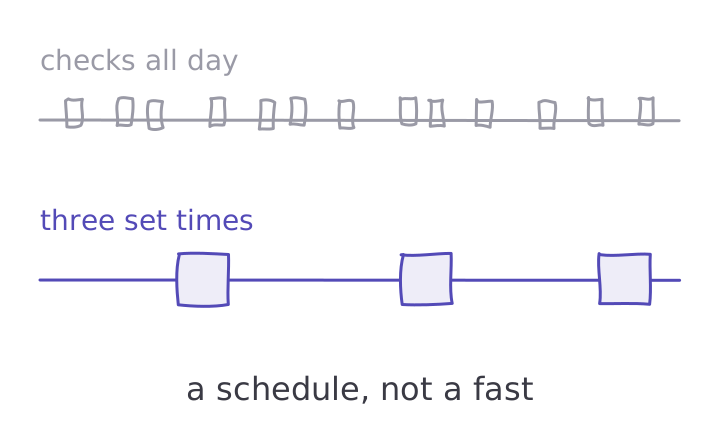
Nicholas Fitz and his colleagues tested something close to this with phone notifications. In a field experiment, 237 people got their notifications in one of three ways: as usual, in batches three times a day, or never.
The batched group felt more attentive and productive, in a better mood, less stressed and more in control of their phones.
The group that got no notifications at all? They gained little, and felt more anxious, with more fear of missing out.
Many of us know this cycle already. Delete the app on Sunday, reinstall it on Wednesday, then use it more than before.
That's the dopamine detox in miniature. Cutting everything out made people uneasy. Putting it on a schedule made them calmer and sharper.
Why even an ignored ping costs you
It isn't only the time you spend on your phone.
Cary Stothart and his team gave people an attention task and quietly sent notifications to their phones while they worked. People didn't pick up or reply. Their performance still dropped, and by about as much as when people actually used their phones for calls or texts.
Think of the phone lying face down next to your keyboard. It's silent most of the time. But each buzz breaks your train of thought for a moment, whether you reach for it or not.
So every buzz you hear while you're thinking costs you something, even when you're proud of yourself for ignoring it.
That's the half of the dopamine detox that works. Not less pleasure in your life. Fewer interruptions from the one thing that pulls you hardest.
Try a schedule, not a fast
Pick one habit. Only one: the app you open without deciding to. News, Instagram, YouTube, LinkedIn, whichever it is for you.
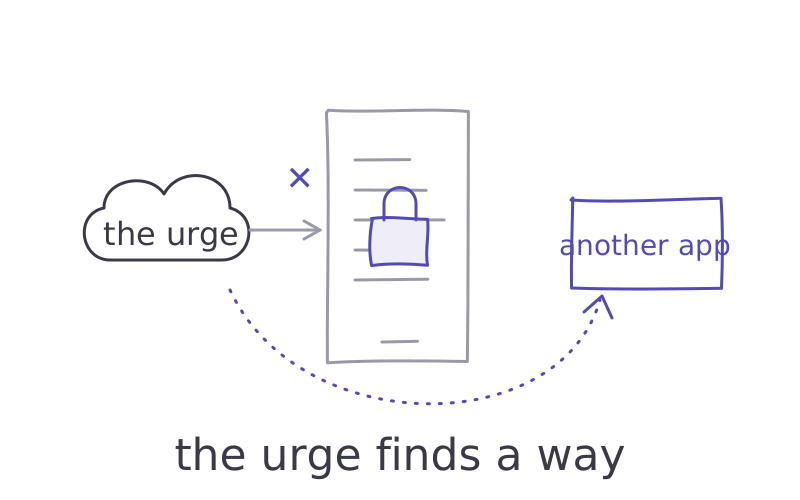
Give it set times. Three short slots work well for most workdays: lunch, mid-afternoon, and evening. Outside those slots, it waits.
Between the slots, hide the trigger. Log out of it on your laptop. Move the app off your home screen. Most phones can now hold notifications and deliver them in batches; on an iPhone it's called Scheduled Summary. If you want a tool for the hard cases, do app blockers work? covers what they fix and what they miss.
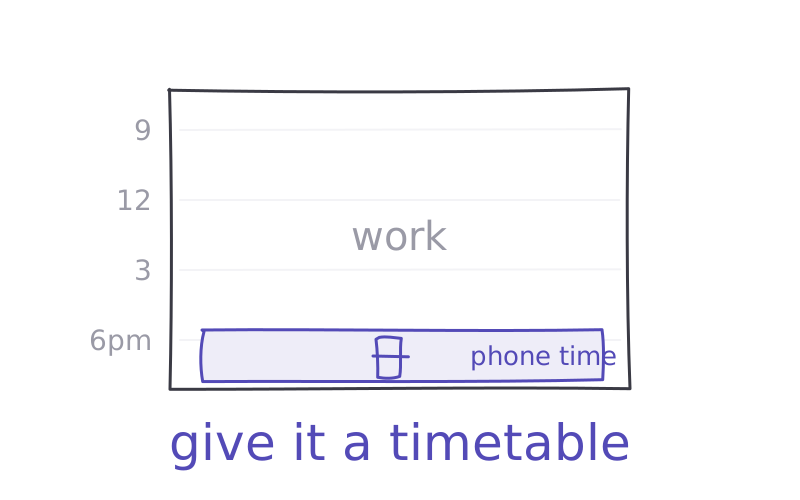
Then keep everything else. Music, a walk, a chat with a colleague. You're not trying to empty your life. You're giving one habit a timetable. If you want a stricter version for a big push at work, try two weeks of monk mode.
Give it a week, then look at what changed: how often you reached for the app outside its slots, and how your afternoons felt. Your phone's screen time report can tell you; how to reduce screen time shows what to look for.
So: which app would you put on a schedule first?
Try it
Keep what you enjoy, and give the pull a timetable. CatchScroll gives you a focus timer that is free for good, and a two-minute reset for the moments you reach for the app anyway.
Try a reset free →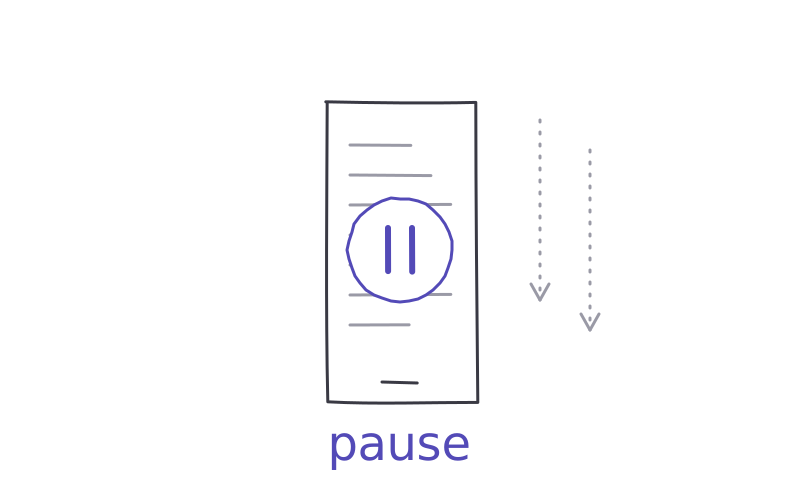
Sources
- 01Sepah, C., in “Silicon Valley takes on Dopamine Fasting 2.0”: an evidence-based technique from behavioural therapy for problem behaviours; one to four hours at the end of each day. University of California, San Francisco / ABC7 News, 2019 ↗
- 02Fitz, N. et al. — Batching smartphone notifications can improve well-being. Field experiment, 237 people: batched three times a day vs as usual vs never. Computers in Human Behavior 101, 84–94, 2019 ↗
- 03Stothart, C., Mitchum, A. & Yehnert, C. — The attentional cost of receiving a cell phone notification. Journal of Experimental Psychology: Human Perception and Performance 41(4), 893–897, 2015 ↗