The Eisenhower matrix: how to stop urgent tasks eating your day
Sort your tasks into four boxes, then protect the one that matters most.
17 October 2026 · 4 min read
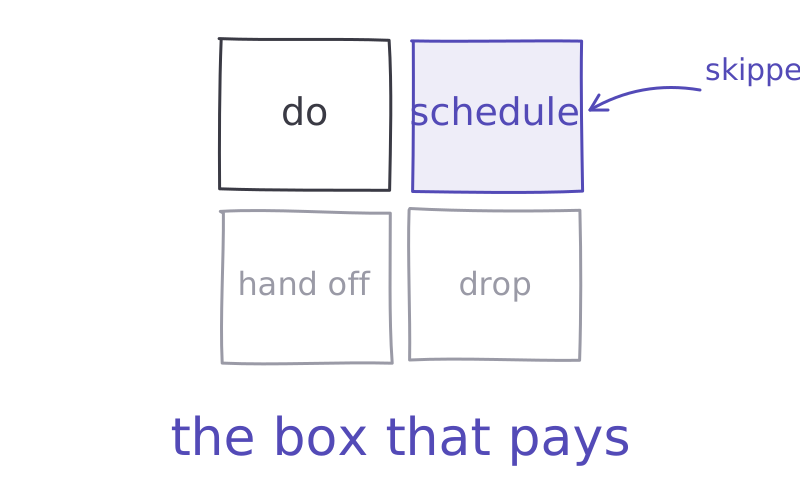
Monday, 9:15. Forty-two unread emails, two Slack threads marked urgent, and the strategy doc you promised yourself you’d finally start.
By lunch, every urgent thing is done. The strategy doc hasn’t been opened.
Four boxes from one line
In a 1954 speech, Dwight Eisenhower quoted a former college president: "I have two kinds of problems, the urgent and the important. The urgent are not important, and the important are never urgent."
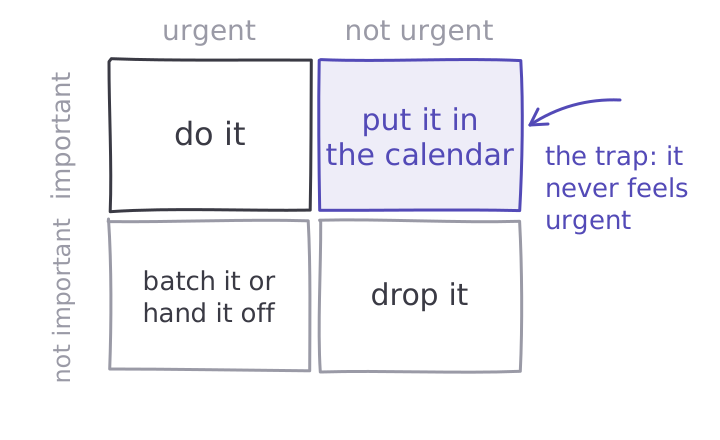
Productivity writers later turned that line into a grid. Ask two questions about every task: is it urgent, and is it important? You get four boxes.
Urgent and important: do it now. The client is waiting, the server is down.
Important, not urgent: put it in the calendar. The strategy doc, the hiring plan, the course you keep meaning to build.
Urgent, not important: batch it or hand it off. Most messages and small requests live here.
Neither: drop it.
Simple enough. So why does the strategy doc still sit unopened?
Why urgent always wins
Meng Zhu, Yang Yang and Christopher Hsee ran five experiments on this. People chose to work on an urgent task even when another task was more important and paid off better. They weren't picking it because it was easier or quicker. The short deadline alone made it feel like the right choice.
Two details matter for your Monday. The effect was stronger in people who see themselves as busy. And it got weaker when people were reminded of each task's payoff at the moment they chose.
So the problem isn't that you don't know the strategy doc matters. It's that at 9:15, the deadline is louder than the payoff.
The box that matters most
The important-but-not-urgent box is where careers and businesses actually move. The pitch that wins next quarter's client. The process that saves your team five hours a week. The skill you need for the next role.
What lives there depends on your job. For a founder, it's the pricing page you've been meaning to rethink. For a manager, the one-to-ones that keep good people from leaving. For a designer, the design system that would stop every project starting from scratch.
None of it will ever be urgent, until it's a crisis. That's why the matrix often fails in practice: people use it to sort the urgent stuff faster, and the important box stays empty.
The fix isn't a better list. It's giving that box time on the calendar before the urgent stuff can claim it.
How to use it this week
Take ten minutes this afternoon.
Dump everything. Write every task on one page, big and small. Don't sort yet.
Write the payoff next to each one. A few words: "wins the Acme deal", "saves 2 hours a week", "keeps Sam happy". This is the step that weakened the urgency effect in the research, and it makes the important tasks obvious.
Book one important task. Pick one from the important-but-not-urgent box and put it in your calendar for tomorrow morning, before you open email. One hour is enough. Time blocking covers how.
Batch the rest. Urgent-but-not-important tasks get two slots a day, or go to someone else. The "neither" box gets crossed out where you can see it.
If everything feels urgent, ask one question for each item: what actually happens if this waits until tomorrow afternoon? Most of the time the honest answer is "nothing much", and the task moves boxes.
Then do it again next Monday, in ten minutes.
So, what's sitting in your important box right now that nobody will ever chase you for?
Try it
When the important task makes you reach for your phone, CatchScroll catches the moment: a two-minute reset for the feeling behind the urge, then back to the work that pays, with a focus timer that is free for good.
Try a reset free →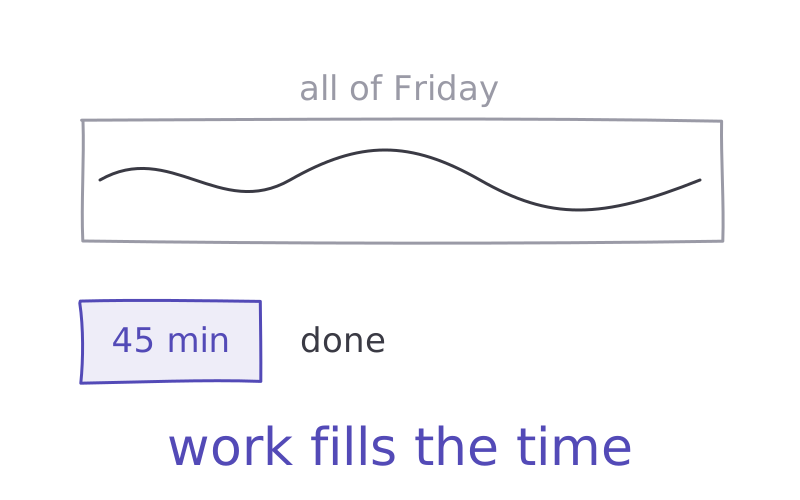
Sources
- 01Quote Investigator — Eisenhower, 1954: “I have two kinds of problems, the urgent and the important. The urgent are not important, and the important are never urgent.” He credited a former college president. quoteinvestigator.com, 2014 ↗
- 02Zhu, M., Yang, Y. & Hsee, C. K. — The mere urgency effect. Five experiments: people chose urgent tasks over important ones with better payoffs; stronger in people who feel busy, weaker when reminded of payoffs. Also Zhu et al., the mere deadline effect: distant deadlines made tasks seem harder. Journal of Consumer Research, 2018 (summary: Johns Hopkins Hub) ↗