The two-minute rule: how to use it without losing your focus
One version helps you clear small tasks. The other helps you start big ones. Use each at the right time.
17 October 2026 · 4 min read
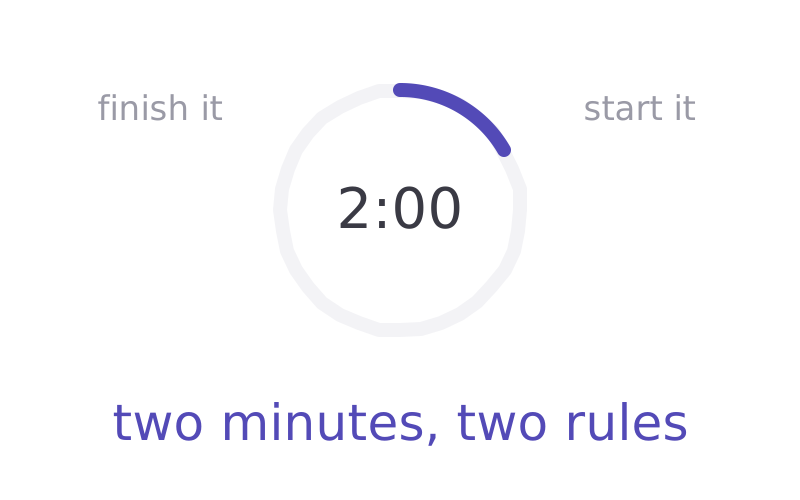
You open your inbox for one email. The reply takes 30 seconds, so you send it. Then the next one. And the next.
An hour later you’ve done thirty two-minute tasks, and none of the work you sat down to do.
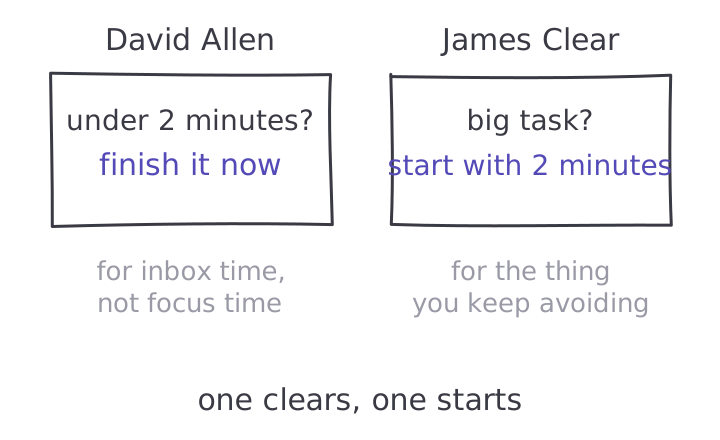
Allen’s rule: finish it now
The original comes from David Allen, who wrote Getting Things Done: "Anything you can do in less than two minutes, if you need to do it at all then do it right then."
His reasoning is simple. If you put a tiny task on a list, you'll spend more than two minutes reading it, thinking about it and coming back to it later. Just do it.
Think of the email that needs a one-line yes, the invoice that needs approving, the meeting that needs moving. Each one is faster to finish than to track.
For clearing an inbox or a pile of small requests, it works beautifully. The pile shrinks, and nothing small sits around nagging you.
Clear’s rule: start with two minutes
James Clear, who wrote Atomic Habits, uses the same name for a different idea: "When you start a new habit, it should take less than two minutes to do."
"Read before bed" becomes "read one page." "Study for class" becomes "open my notes." The point isn't to finish anything. It's to make starting so small that there's nothing to resist.
At work, that looks like: "write the proposal" becomes "open the doc and write the heading." "Call the supplier" becomes "find their number and dial." "Plan the quarter" becomes "write three goals on a sticky note."
None of those finish the job. They get you past the moment where the job feels too big to begin, which is usually where the day goes wrong. Once you've started, carrying on is much easier than starting was.
When Allen’s rule goes wrong
The trouble starts when you use Allen's rule in the middle of focused work.
Every "quick" reply is a switch. Sophie Leroy, who studies attention at work, found that when people move on from an unfinished task, part of their attention stays stuck on it. She calls it attention residue. So the 30-second Slack reply doesn't cost 30 seconds. It costs the next ten minutes of your report, which you now come back to with half your mind still in Slack. More in context switching.
That's the opening scene: thirty sensible two-minute decisions that add up to a lost hour.
Allen's rule was never meant to run all day. It's a tool for processing time, when your job is to get through the pile. During focus time, your job is one thing.
How to use both today
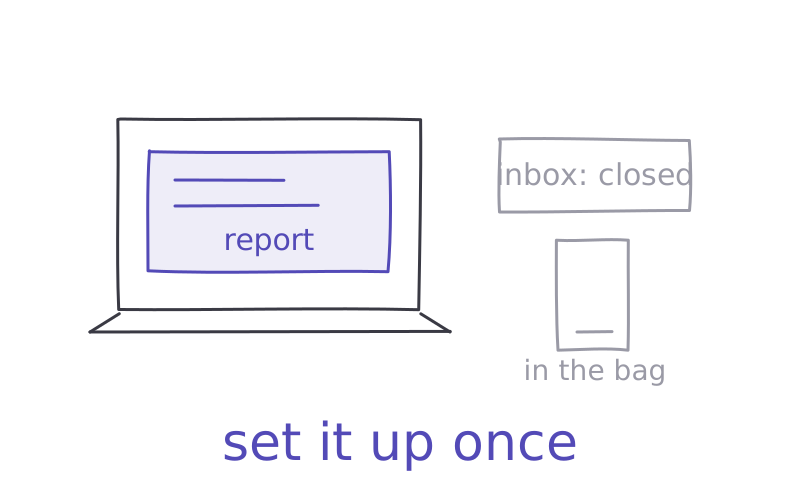
During focus blocks, list, don't do. Keep a scrap of paper next to you. When a two-minute task comes up, write it down and keep going.
Clear the list twice a day. Late morning and late afternoon, take that list and your inbox and apply Allen's rule hard: if it's under two minutes, do it now.
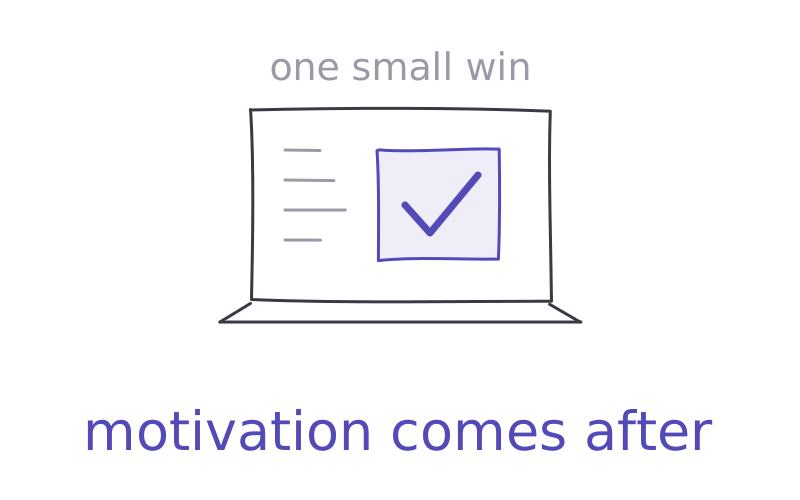
Use Clear's rule on the task you're avoiding. Shrink it to a two-minute start: open the file, write the first line, send the first message. If it still won't start, read no motivation to work.
Hide the badges during focus blocks. Close the email tab and pause Slack notifications, so new two-minute tasks can't find you until list time.
Watch for fake two-minute tasks. If a "quick" one is still going after ten minutes, stop and give it a proper slot in your calendar.
So, what's the two-minute version of the task you've been avoiding all week?
Try it
The urge to clear one more small thing is often the urge to avoid the big one. CatchScroll catches that moment with a two-minute reset for the feeling behind it, and a focus timer that is free for good.
Try a reset free →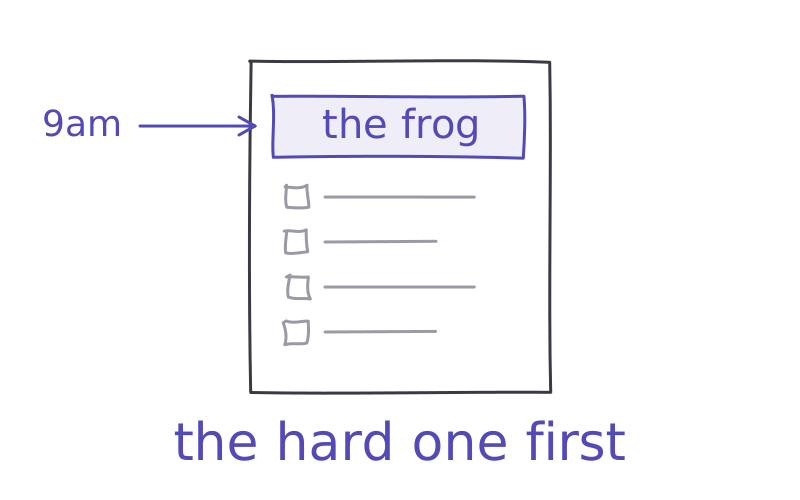
Sources
- 01Allen, D. — The two-minute rule: “Anything you can do in less than two minutes, if you need to do it at all then do it right then.” Getting Things Done podcast, 2020 ↗
- 02Clear, J. — How to stop procrastinating: “When you start a new habit, it should take less than two minutes to do.” jamesclear.com ↗
- 03Leroy, S. — Why is it so hard to do my work? The challenge of attention residue when switching between work tasks. Organizational Behavior and Human Decision Processes 109(2), 168–181, 2009 ↗