Why you can't stop checking your phone at work or while studying
And why blocking the apps doesn't fix it.
31 August 2026 · 4 min read
You sit down with a clear plan. Twenty minutes later your phone is in your hand, and you don't remember deciding to pick it up.
The usual story is that phones are built to interrupt you, so you should block them. That's only half right, and the wrong half is why the fix keeps failing.
Your phone isn’t the one interrupting you
Researchers at the London School of Economics put cameras on people's glasses and recorded more than 200 hours of ordinary phone use. Then they counted what started each pickup.
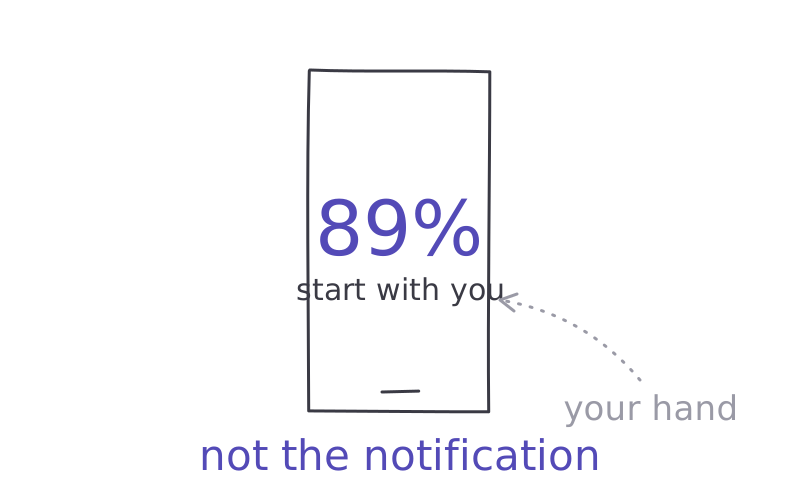
89% of the time, the person did. Only 11% of pickups began with a notification.
That changes the problem. If notifications were the cause, silencing them would end it. Instead, almost nine in ten pickups start somewhere the phone can't reach: in you, a second before your hand moves.
We did this before smartphones
This isn't really about phones. It's about attention.
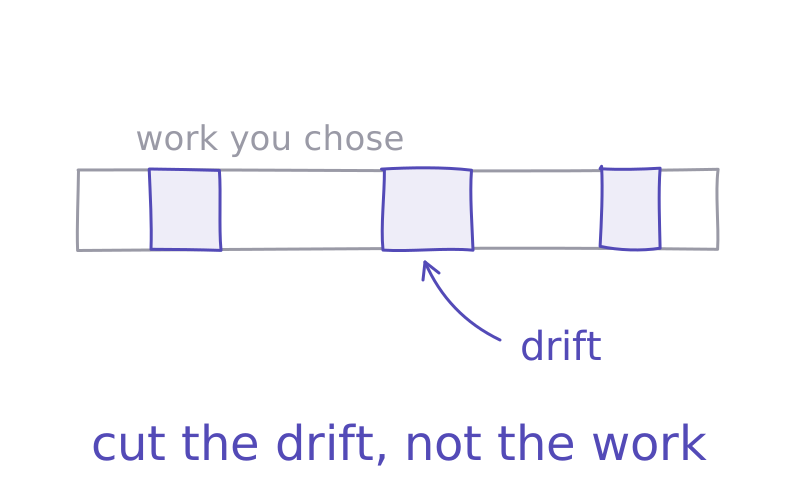
Laura Dabbish, Gloria Mark and Víctor González watched people at work and logged over 5,000 task switches. Close to half of the interruptions that pulled people off their work came from the people themselves, not from anything around them. Do that all day and it shows up as a shorter attention span.
Anyone who has revised for an exam knows this. Nobody interrupted you. You got up for a snack you didn't want, or reorganised your notes for the third time. The phone didn't create the habit. It just gave it somewhere easy to go.
Why blockers move the urge
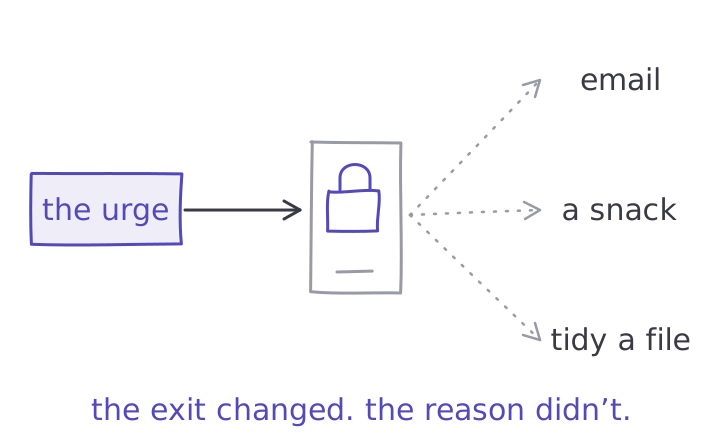
Watch what happens when a blocker fires. The urge arrives. You reach. The app is locked. And you don't go back to work. You check email instead. Or tidy one file. Or spend four minutes turning the blocker off.
The blocker stopped the destination. It never touched the reason you left. Whatever pushed you away from the task is still pushing, and it'll keep finding exits until you deal with it directly. More in do app blockers work?
Name the feeling, then reset it
Nir Eyal calls the push an internal trigger: a discomfort you're trying to escape. Think back to the last time you picked up your phone. The work was boring. You were anxious it wasn't good enough. You were stuck. You were tired.
Here the research gets practical. A UCLA team led by Matthew Lieberman found that when people put a word to a feeling, the brain's alarm centre quietened down. It's called affect labelling, and it takes about four seconds. Not "why am I distracted?" Just the name: bored, anxious, stuck.
A name takes the edge off, but most feelings also live in your body. In a Stanford trial, "cyclic sighing" (two breaths in through the nose, one long breath out) improved mood and lowered the body's stress response more than meditation did, at five minutes a day.
Boredom is different: it needs more stimulation, not less, so stand up and set yourself a short challenge.
What to try at your desk
Next time your hand starts moving, stop before you unlock. The reach isn't the problem. The problem is that nothing stands in front of it. Name the feeling in one word. Do the matching reset for a minute or two: a long breath out for anxious, a challenge for bored, a smaller task for stuck. Then go back.
The first few times, this feels slower than just checking. It is slower. It's also the only version that leaves you able to sit back down. CatchScroll is built on this sequence: you tap the feeling, it runs the reset made for it, and you're back at work in about two minutes.
The six most common feelings are in why we doomscroll.
So, what did you feel the last time you picked up your phone?
Try it
CatchScroll is built on this sequence. You name what you are feeling, it runs the reset matched to that feeling, and you go back to work — usually in under two minutes. The focus timer is free for good, and you can try the resets free for 7 days.
Try a reset free →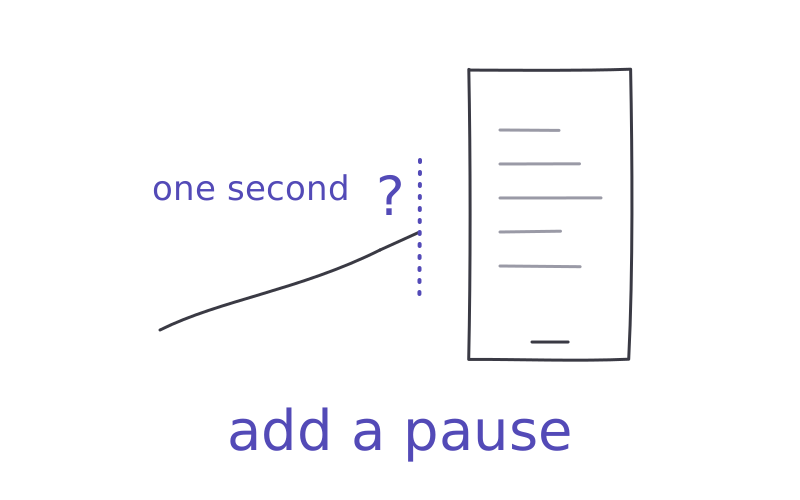
Sources
- 01Heitmayer, M. & Lahlou, S. — Smartphone use is initiated by the user in 89% of interactions. Computers in Human Behavior, 2021 ↗
- 02Dabbish, L., Mark, G. & González, V. — Why do I keep interrupting myself? 5,089 observed task switches: 22% from external interruptions, 18% self-interruptions. CHI Conference on Human Factors in Computing Systems, 2011 ↗
- 03Eyal, N. — The 4 steps to becoming indistractable: internal triggers first, precommitments last. nirandfar.com ↗
- 04Lieberman, M. D. et al. — Putting feelings into words: affect labelling disrupts amygdala activity. Psychological Science 18(5), 421–428, 2007 ↗
- 05Balban, M. Y. et al. — Brief structured respiration practices enhance mood and reduce physiological arousal. Cell Reports Medicine, 2023 ↗